



Blog
Welcome to the Evhoc blog section.
Where the art of our production merges with a passion for quality and elegance.
We are excited to share our "know-how" with you and offer you an in-depth look into the beating heart of our company.
News
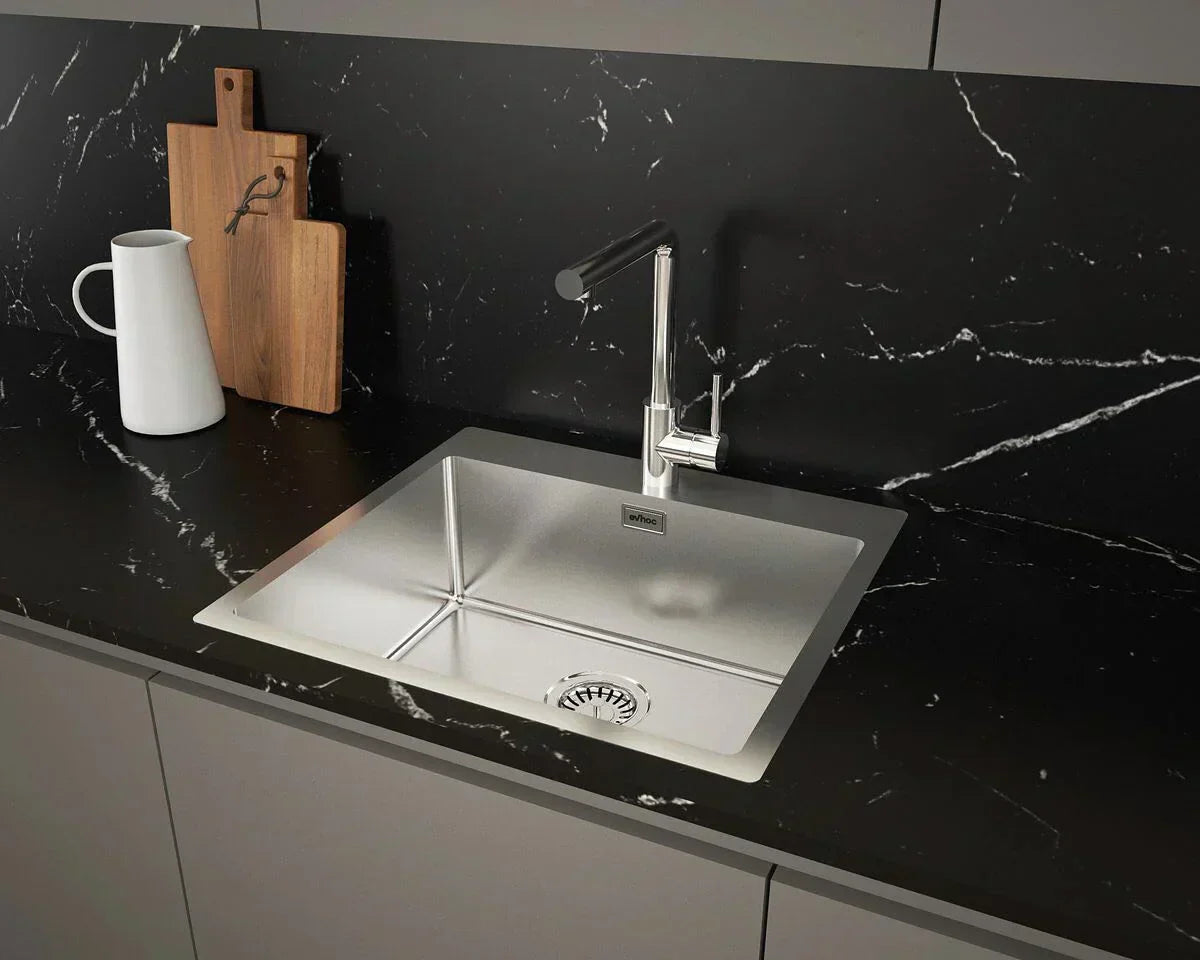

5 natural tricks to clean a sink and keep it always shiny
After the article on cleaning stainless steel sinks you asked to deal with those in other materials. Here too, the basic concept is simple: constant use of chemical products and detergents can be harmful to surfaces, making them less shiny. On the contrary, there are several natural remedies that allow you to maintain shine while ensuring deep cleaning (as well as being much, much cheaper), let's find out what they are! These tips are valid for composite sinks such as acrylic stone and composite quartz. Among the most common trade names for these materials are: Kuarzite®, HI-MACS®, Lapitec®, Silestone®, Krion®, Paperstone®, Solid Surface, Silgranit®, Corian®, Fragranite® (Granitek®, Granit®, Ultragranit®, Microgranit® or Microultragranit®), Cristadur®, Ultraquartz®, Ultrametal® (or Metalquartz®), Vitrotek®, Grohe® k700, and many others. 1) Use a mixture of detergent and bicarbonate of soda for daily cleaning. A mixture of washing-up liquid and bicarbonate of soda for daily use is the quickest and most recommended method. 2) For removing stubborn stains, use white vinegar (for about 4 hours). White vinegar, to be sprayed directly onto the surface and then left to sit for about 4 hours. To prevent it from evaporating immediately, it is advisable to place sheets of baking paper on the vinegar-soaked sink. 3) Use a mixture of three parts cream of tartar and one part hydrogen peroxide. Using a damp cloth, spread the mixture over the sink until it dries, then wipe with another damp cloth. 4) Use flour to make your sink shine. To make your sink shine, simply sprinkle a little flour on the surface of the sink and rub with a soft, dry cloth, then rinse with water. 5) Use olive oil to remove water stains. Simply polish with a little olive oil, rubbing it in with a damp cloth, and then dry with a dry cloth. We will continue to publish tips like this over the coming weeks... and, of course, all suggestions, criticisms and proposals are welcome. What topic would you like us to cover next? Let us know in the comments. Happy cleaning!
Learn moreDiscover the latest trends in Italian design for sinks, faucets, and accessories through our articles: we will guide you through the aesthetic choices that characterize our products, each designed to bring style and functionality to your spaces.
If you are looking for tips on choosing the perfect sink or the ideal faucet for your kitchen, our blog is the place for you. Our experts share practical advice and creative ideas to help you make informed and tailored decisions.
And then there's more: advice, ideas, guides, tips, tricks, and secrets. We are thrilled to share all of this with you and to establish a digital space where Italian excellence can express itself.